
In workplaces where hazardous chemicals, corrosive substances or other dangerous materials are handled, every second matters. An emergency safety shower is designed to reduce the severity of chemical exposure by rapidly flushing contaminants from the body. However, the effectiveness of any emergency shower depends on more than just water flow. The water must also be supplied at the correct temperature, in sufficient volume and for the required duration.
This is where emergency shower water heaters play a vital role. They ensure that emergency showers deliver a continuous supply of tepid water, helping injured workers remain under the shower for the full flushing period without the risk of hypothermia or thermal shock.
For UK businesses, selecting the correct tankless emergency shower water heater or electric emergency shower water heater is not simply a matter of convenience. It is an important part of creating a safe working environment and supporting compliance with recognised standards such as BS EN 15154 and UK water regulations.
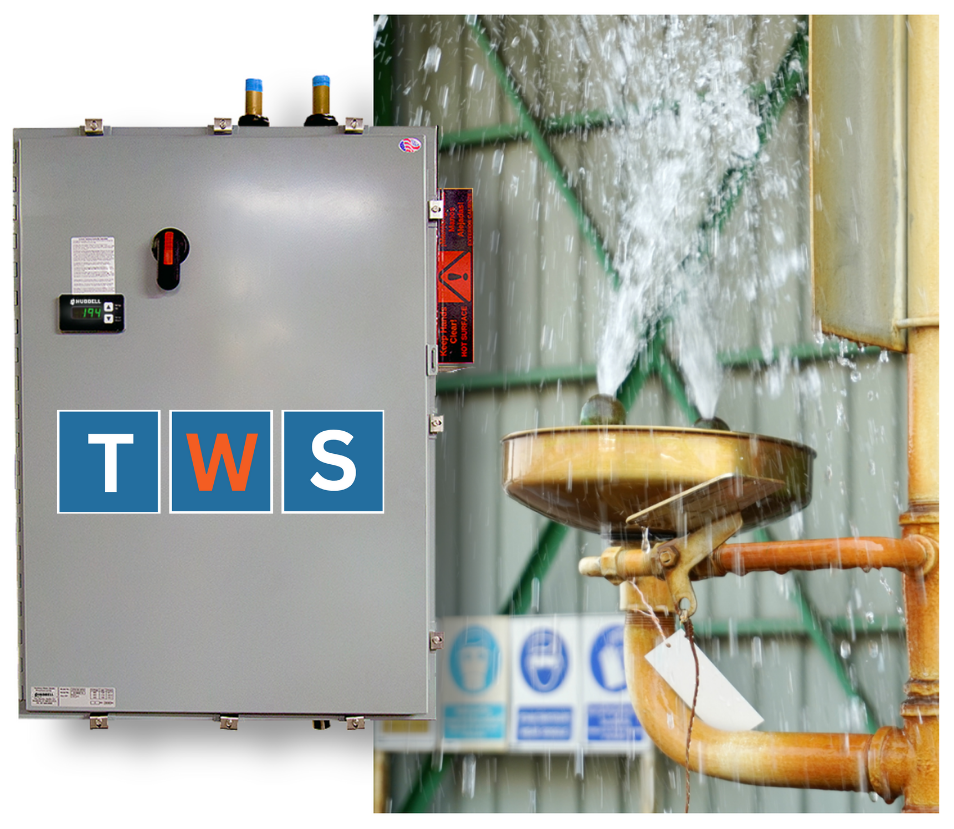
What is an emergency shower water heater?
An emergency shower water heater is a specialised water heating system designed to provide a continuous supply of tepid water to an emergency safety shower whenever it is activated.
Unlike conventional domestic water heaters, these systems are engineered specifically for safety-critical applications where water must be delivered immediately, continuously and at the correct temperature during an emergency.
A quality emergency shower should provide:
- Continuous flushing for at least 15 minutes
- A consistent high-volume water supply
- Water at a safe tepid temperature
- Reliable operation whenever activated
Because emergency showers may remain unused for long periods before suddenly being required, the supporting water heater must be dependable, responsive and capable of delivering full performance without delay.
Why tepid water is essential
One of the most misunderstood aspects of emergency shower systems is water temperature.
Many people assume that cold water is suitable because it cools burns quickly. While cool water may initially feel appropriate, prolonged exposure to cold water can cause serious discomfort and may even result in hypothermia. When a casualty becomes too cold, they are more likely to leave the shower before the recommended flushing time has been completed.
Equally, excessively hot water is dangerous because it can:
- Increase skin irritation
- Accelerate chemical absorption into the skin
- Cause additional burns
- Discourage effective decontamination
European guidance recommends supplying tepid water, with temperatures generally maintained between 15°C and 37°C, with 15°C recognised as the minimum temperature to help prevent hypothermia during prolonged flushing.
This is why selecting the correct Tepid Water Heater is so important for any emergency shower installation.
How does an emergency shower water heater work?
Many people ask, How does an emergency shower water heater work?
The principle is straightforward, but the engineering is designed specifically for emergency situations.
When the emergency shower activation handle or pull rod is operated:
- The shower valve opens immediately.
- Water begins flowing to the shower head.
- The dedicated water heater heats incoming cold mains water to a safe tepid temperature.
- The heater maintains the required temperature while supporting the necessary flow rate throughout the emergency.
- Water continues flowing until the shower is intentionally switched off.
Modern instant water heater for emergency shower systems are particularly effective because they heat water only when required. Instead of storing large volumes of hot water, they produce heated water on demand, allowing continuous operation without waiting for stored water to recover.
This approach offers improved energy efficiency while ensuring reliable performance whenever the system is needed.
Why tankless water heaters are becoming the preferred solution
Many UK facilities are replacing traditional storage systems with a Tankless Emergency Shower Water Heater.
Unlike conventional storage cylinders, tankless systems heat water instantly as it passes through the heating chamber.
Their advantages include:
- Immediate hot water production
- Unlimited continuous operation when correctly sized
- Reduced standby energy losses
- Compact installation
- Lower maintenance requirements
- No stored water stagnation concerns
- Better energy efficiency
For industrial environments where emergency showers may require sustained high-volume operation, a correctly specified tankless system offers significant operational advantages.
Electric emergency shower water heaters
An Electric Emergency Shower Water Heater is commonly selected where a reliable electrical supply is available and gas infrastructure is impractical.
Electric systems offer several benefits:
- Fast response times
- Precise temperature control
- Compact footprint
- Minimal servicing requirements
- Clean operation without combustion
- Straightforward installation in many commercial buildings
These systems are widely used in laboratories, pharmaceutical facilities, educational institutions, manufacturing plants and chemical processing sites throughout the UK.
Essential performance requirements
An emergency shower is only effective if it satisfies recognised performance criteria.
1. Immediate activation
The shower valve should fully open within one second and remain open without requiring the user to hold the control.
Hands-free operation is essential because the casualty may need both hands to remove contaminated clothing or protect their face during decontamination.
2. Continuous water supply
Emergency showers should provide continuous flushing for at least 15 minutes.
This allows sufficient time to dilute and remove hazardous chemicals from the skin, reducing the severity of injury.
3. Correct flow rate
Under BS EN 15154 guidance, body showers should provide a minimum continuous flow of 60 litres per minute where no national requirement specifies otherwise.
Some installations may be designed to deliver higher flow rates depending on site-specific risk assessments, but maintaining a consistent flow is critical for effective decontamination.
4. Tepid water temperature
The water heater must consistently provide water that supports safe flushing throughout the entire emergency.
Maintaining water above 15°C helps reduce the risk of hypothermia while avoiding excessively hot water that could worsen chemical injuries.
5. Water quality
The water supplied should be clean and suitable for emergency washing.
Additionally, all materials used within the plumbing and heating system should comply with applicable UK water regulations, including requirements relating to materials that come into contact with potable water. Components should not introduce contaminants or substances that may leach into the mains water supply.
Installation considerations in the UK
The location of an emergency shower is just as important as the equipment itself.
Best practice recommends that emergency showers should:
- Be highly visible
- Be clearly identified with appropriate safety signage
- Be accessible within approximately 10 seconds of the hazard
- Not require users to climb stairs
- Not require passage through doors
- Have an unobstructed route at all times
These requirements help ensure immediate access during an emergency, when every second can significantly affect the outcome.
Where emergency shower water heaters are commonly used
Emergency shower heating systems are installed wherever there is a risk of exposure to hazardous substances.
Typical applications include:
- Chemical manufacturing
- Pharmaceutical production
- University laboratories
- Research facilities
- Petrochemical plants
- Battery manufacturing
- Water treatment facilities
- Mining operations
- Food processing plants using aggressive cleaning chemicals
- Industrial manufacturing
- Healthcare laboratories
- Aerospace engineering facilities
Each environment has unique water demand requirements, making correct heater sizing essential.
Choosing the right emergency shower water heater
When selecting an emergency shower heating system, several factors should be considered.
Flow capacity
The heater must comfortably deliver the required emergency shower flow without temperature fluctuations.
Temperature stability
The unit should maintain consistent tepid water throughout the full emergency period.
Instant operation
There should be no waiting time before heated water becomes available.
Energy efficiency
Modern tankless systems only heat water when needed, helping reduce unnecessary energy consumption.
Reliability
Emergency equipment must perform correctly every time it is activated, regardless of how infrequently it is used.
Compliance
Ensure the system supports recognised UK and European safety standards and uses components suitable for connection to the UK mains water supply.
Inspection and maintenance
Installing the correct heater is only part of maintaining a safe emergency shower system.
Routine inspection should include checking:
- Water flow rate
- Water temperature
- Valve operation
- Shower spray pattern
- Accessibility
- Signage visibility
- General condition of the heating system
Operational testing helps identify issues before an emergency occurs and supports ongoing workplace safety compliance.
Benefits of installing a dedicated emergency shower water heater
A properly designed emergency shower heating system provides significant safety and operational advantages.
These include:
- Reliable delivery of tepid water
- Improved user comfort during prolonged flushing
- Reduced risk of hypothermia
- Better compliance with recognised standards
- Continuous operation during emergencies
- Enhanced workplace safety
- Improved protection for employees handling hazardous materials
- Lower operating costs when using energy-efficient tankless technology
Why professional system design matters
Emergency shower water heating is a specialist application that differs significantly from standard commercial hot water systems.
Every installation should be designed around:
- Expected water demand
- Required flow rate
- Incoming mains water temperature
- Available electrical capacity
- Site layout
- Risk assessment
- Applicable UK regulations
A correctly specified Instant Water Heater for Emergency Shower ensures that the shower performs exactly as intended during the moments when reliable operation matters most.
For organisations handling hazardous chemicals, corrosive liquids or dangerous industrial processes, investing in a purpose-designed Tepid Water Heater, Electric Emergency Shower Water Heater or Tankless Emergency Shower Water Heater helps provide dependable emergency decontamination while supporting safer workplaces and recognised UK safety standards.
For further information, please visit https://tanklesswatersolutions.co.uk or email [email protected].