
The way UK businesses approach energy use has changed significantly over the past few years. Rising operating costs, increasing environmental responsibilities and continued investment in modern building infrastructure have encouraged organisations to look beyond traditional equipment and adopt technologies that deliver long-term efficiency.
One area receiving greater attention is commercial water heating. Whether in hotels, restaurants, healthcare facilities, offices, manufacturing plants or educational buildings, businesses depend on a reliable supply of hot water every day. At the same time, they are looking for practical ways to reduce unnecessary energy consumption without compromising performance.
This is one reason why more organisations are replacing conventional storage systems with modern tankless technology. Unlike traditional systems that continuously keep a tank of water hot, tankless units heat water only when it is required. This simple operating principle can improve efficiency while reducing wasted energy.
The growing interest in these systems also reflects the direction of UK Energy Policy, which places increasing emphasis on energy efficiency, cleaner technologies and improving the performance of commercial buildings.
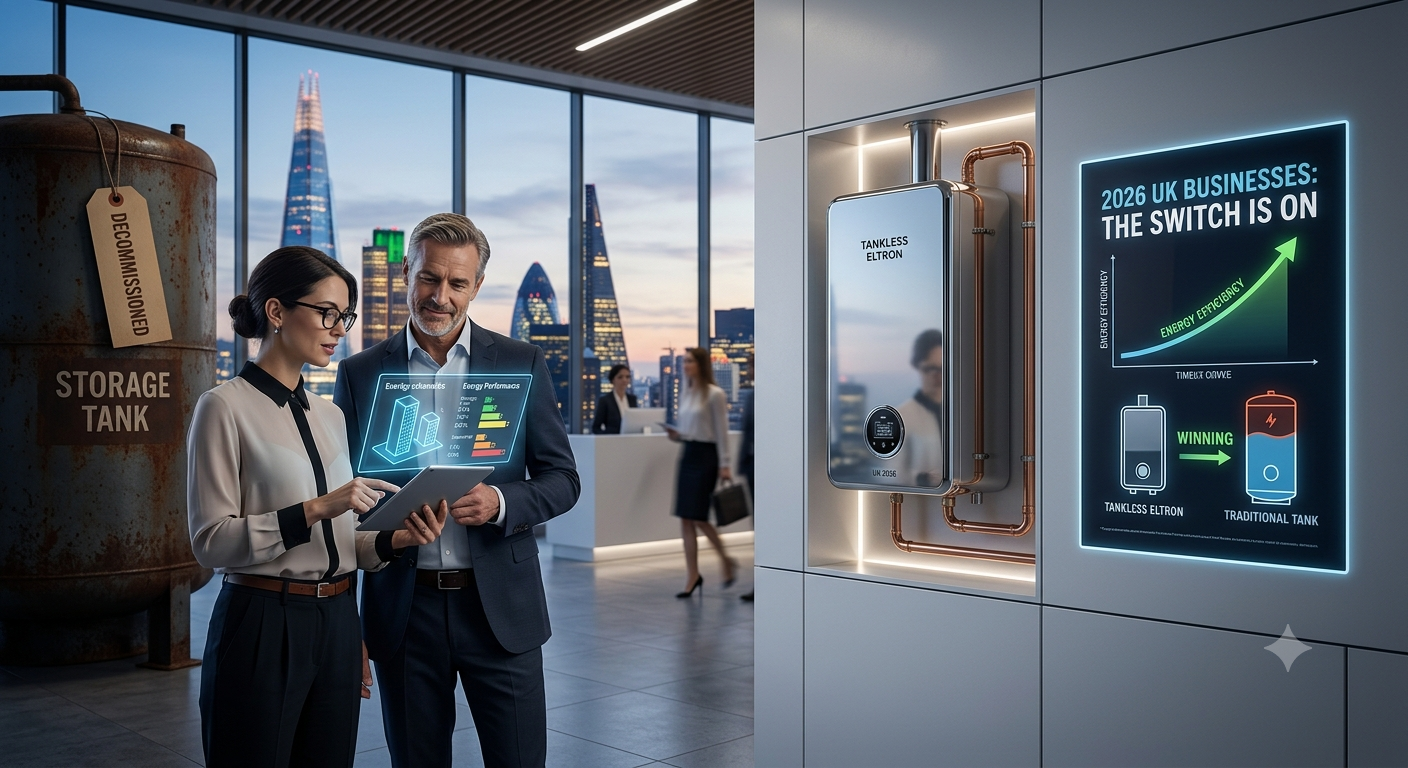
Energy Efficiency Is Becoming a Business Priority
Energy is one of the largest operating expenses for many commercial premises. Although lighting, HVAC and industrial equipment often account for a significant proportion of electricity consumption, hot water production remains an important contributor in many industries.
Traditional storage heaters constantly maintain a reservoir of heated water, even when demand is low. During evenings, weekends or quieter business periods, energy continues to be used simply to replace heat lost from the storage cylinder.
An electric water tankless heater works differently. Water is heated instantly as it flows through the appliance, meaning electricity is used only when hot water is actually required. Eliminating standby heating can significantly improve the overall efficiency of a commercial hot water system.
For businesses focused on reducing operational costs, this makes tankless technology an increasingly attractive investment.
Supporting the UK's Long-Term Energy Objectives
Across the UK, there is growing emphasis on reducing unnecessary energy consumption while improving the efficiency of buildings and infrastructure.
The country’s commitment to Net Zero 2050 has encouraged organisations to modernise ageing equipment and consider technologies that support lower-carbon operations. Although every building has different requirements, improving energy efficiency remains one of the most practical ways for businesses to reduce operating costs while contributing to broader sustainability objectives.
Modern electric water heating systems complement this direction by using energy only when demand exists rather than maintaining stored hot water throughout the day.
Eliminating Standby Heat Loss
One of the biggest advantages of tankless systems is the removal of standby heat loss.
Conventional storage heaters lose heat through the walls of the storage cylinder. Even with modern insulation, this heat must continually be replaced to maintain the desired water temperature.
Because tankless systems do not store large quantities of heated water, they avoid much of this unnecessary energy consumption.
This makes them particularly suitable for commercial premises where demand fluctuates throughout the working day.
Examples include:
- Offices
- Hotels
- Restaurants
- Leisure centres
- Healthcare facilities
- Manufacturing sites
- Educational buildings
Instead of continuously heating unused water, energy is consumed only during periods of actual use.
Better Energy Management
Many facilities managers now monitor electricity consumption more closely than ever before.
Rather than simply replacing failed equipment, businesses are investing in systems that offer greater operational control and improved efficiency.
Tankless water heaters support this approach because they respond directly to demand.
Benefits include:
- Reduced unnecessary electricity consumption
- Improved control over energy usage
- Better integration with building management systems
- Lower operational waste
- More predictable performance
When combined with wider energy management strategies, efficient hot water systems can contribute to better overall building performance.
Compact Design for Modern Commercial Buildings
Commercial space has become increasingly valuable.
Large storage cylinders require dedicated plant rooms and occupy space that could otherwise be used for productive business activities.
Modern tankless units are considerably smaller and can often be installed in locations where traditional systems would be impractical.
For commercial refurbishments and new developments, this provides several advantages:
- More usable floor space
- Simpler installation
- Easier maintenance access
- Greater flexibility during building design
These practical benefits are contributing to their increasing popularity across multiple sectors.
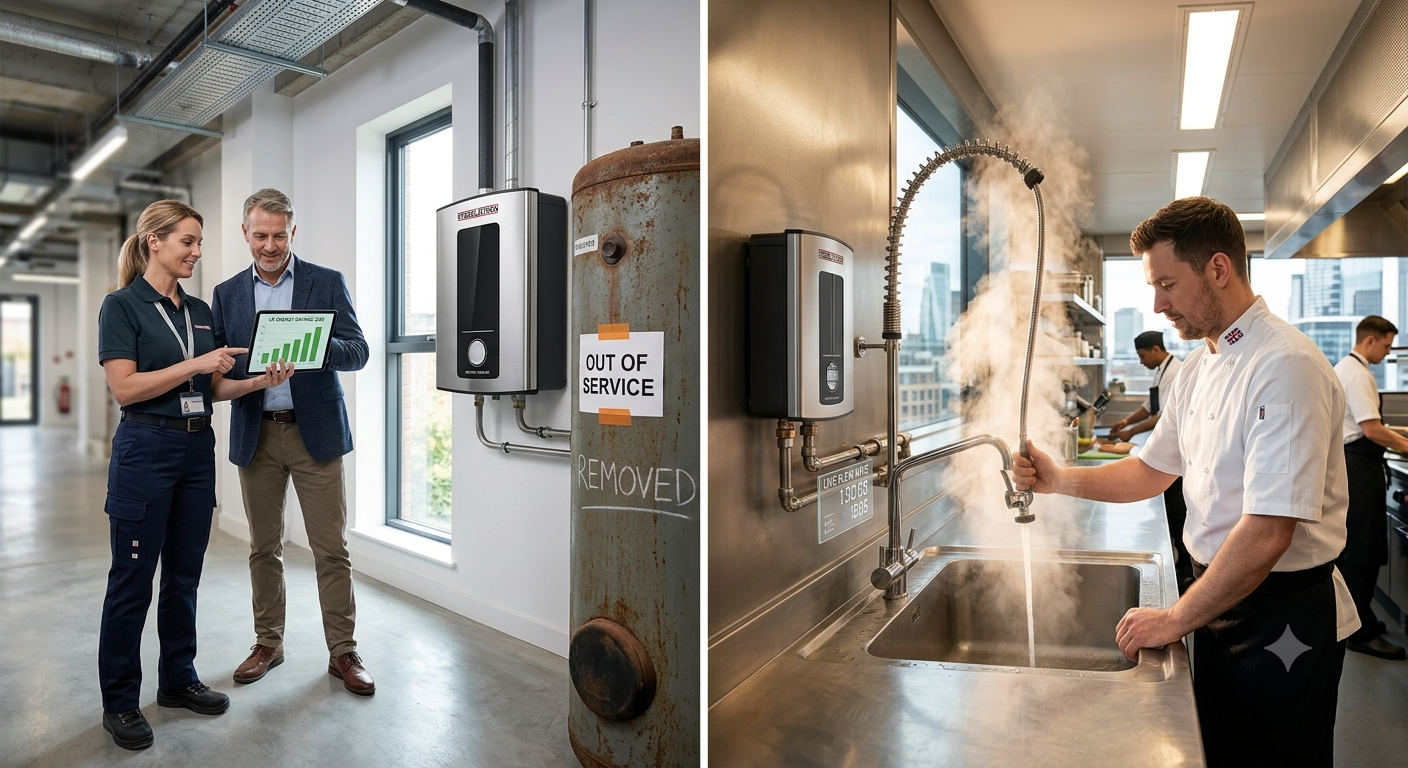
Building Electrification Is Accelerating
Another important trend influencing purchasing decisions is building electrification.
As businesses modernise their properties, many are reviewing older gas-fired equipment and considering efficient electric alternatives where appropriate.
Electric tankless systems fit naturally into this transition because they remove the need for gas burners, flues and stored hot water while integrating more easily with electrically powered buildings.
For organisations investing in renewable electricity or broader energy efficiency improvements, electrically powered water heating can form part of a wider strategy to modernise building services.
Reliable Performance for Commercial Applications
Every commercial property has unique hot water requirements.
Restaurants experience heavy demand during meal services.
Hotels often have concentrated usage during the morning.
Healthcare facilities require dependable hot water throughout the day.
Industrial premises may need hot water for cleaning processes or manufacturing operations.
Selecting the correct commercial water heater therefore requires careful assessment of:
- Required flow rate
- Incoming cold water temperature
- Peak demand periods
- Simultaneous outlet usage
- Available electrical supply
Modern commercial tankless systems are available in multiple power outputs, including high-capacity three-phase models designed specifically for demanding commercial applications.
Correct sizing ensures businesses receive consistent hot water performance without unnecessary energy consumption.
Lower Maintenance Requirements
Although all commercial heating equipment requires routine servicing, tankless systems eliminate several components associated with traditional storage heaters.
Without a large storage cylinder, businesses avoid many of the maintenance tasks linked to stored hot water systems.
For facilities managers responsible for multiple sites, reducing maintenance complexity can help minimise downtime while simplifying long-term asset management.
Supporting Sustainable Commercial Buildings
Today’s businesses are increasingly expected to demonstrate responsible environmental practices.
Improving energy-efficient buildings has become an important objective for organisations seeking to reduce operating costs while supporting environmental targets.
Water heating is only one element of overall building performance, but replacing inefficient equipment with modern alternatives can contribute towards wider sustainability programmes alongside:
- LED lighting
- Smart building controls
- Improved insulation
- Renewable electricity generation
- High-efficiency HVAC systems
Together, these improvements can help create buildings that operate more efficiently over their lifetime.
Why Businesses Are Making the Switch
The growing demand for tankless water heating systems is being driven by a combination of practical and economic factors rather than a single trend.
Businesses are increasingly looking for equipment that delivers:
- Improved energy efficiency
- Reduced standby heat loss
- Compact installation
- Reliable hot water supply
- Lower maintenance requirements
- Better long-term operating performance
An appropriately specified electric water tankless heater can meet these objectives while supporting wider commercial energy management strategies.
Likewise, choosing the right commercial water heater allows organisations to match equipment capacity to operational demand, helping improve efficiency without compromising reliability.
As commercial buildings continue to modernise in 2026, tankless technology is becoming an increasingly practical solution for businesses seeking efficient, space-saving and dependable hot water systems that align with evolving energy expectations across the UK.