RO/DI’s Applications And Required Purity Levels
RO/DI is very versatile, used for anything from simple parts washing to more demanding pharmaceutical, medical, electronic, and foodservice applications. It doesn’t require the use of harmful chemicals, which can be difficult to remove and are environmentally unfriendly.
It’s important to note that water ranges in purity from lower resistivity (.05–.8 megohms) to higher resistivity (10–18.2 megohms). Lower-purity water conducts electricity better thanks to its salt and mineral content. As a result, the type of water used for a specific task can differ depending on the application.
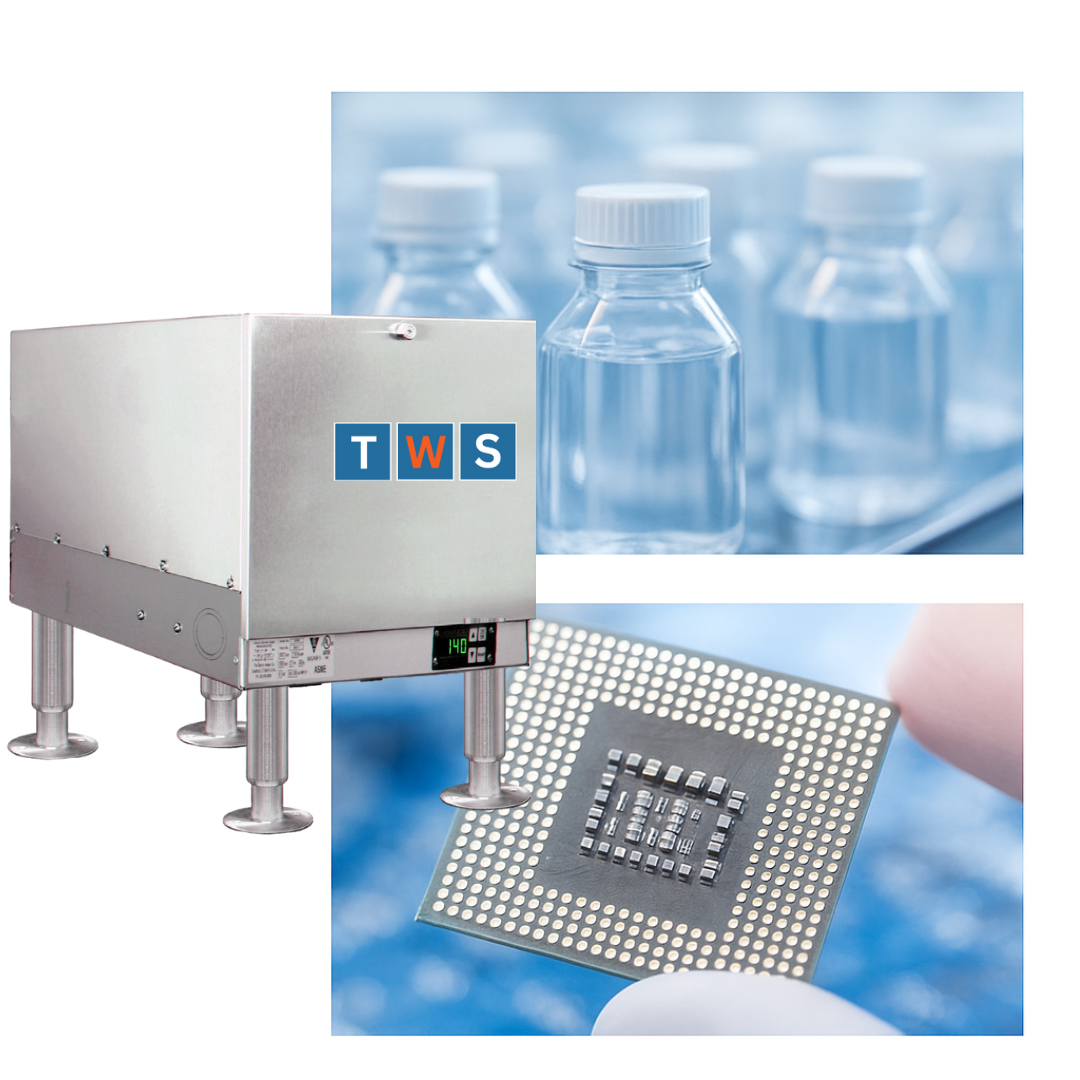
When cleaning medical devices such as implants or semiconductors such as microchips, the need for water of the highest purity is crucial. The high resistivity of this water means it doesn’t leave behind any minuscule particles or debris. Components that aren’t properly cleaned could lead to component or system failure. No manufacturer should be dealing with that or the associated headaches!
Water that is ultrapure and has the highest resistivity isn’t necessary for many mainstream applications, such as parts rinsing. Washing car parts and certain humidification systems with water that has a lower resistivity is acceptable. High-purity water with a low-medium resistivity (around 6.7 megohms) is standard for most applications involving parts washing with deionized water.
Why Should You Be Using HOT Water In Your RO/DI System?
Do you wash your hands in cold water? Probably not. It’s for the same reason you wash your dishes in hot water; it simply cleans better. But why, exactly? The science is pretty straightforward. When water molecules heat up, they start to move faster and bounce off each other. This leaves more space between the molecules for contaminants to occupy. They just can’t resist the attraction! Further, the increased energy generated by the hot temperature destroys bonds between surfaces and their contaminants. Cold water simply doesn’t contain enough energy to achieve this.
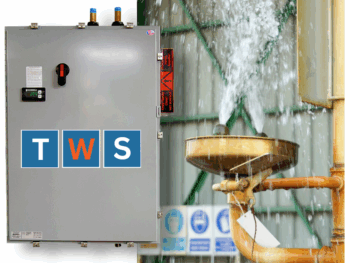
There is a downside to using hot water. Ironically, it’s a side effect of its benefits. Heated RO/DI water is more corrosive than cold water but much more powerful and effective. You’ll need a robust water heater that can handle the corrosive effects. There are many materials on the market today. The ideal choice depends on your specific application and budget.